The mission of a Toastmasters club
is to provide a mutually supportive and positive learning environment in
which every individual member has the opportunity to develop oral
communication and leadership skills, which in turn foster
self-confidence and personal growth.

Megan, President of Peace Speakers, opens our meeting on a bright note. She hopes we've enjoyed our Labor Day weekend and are ready to be engaged in our meeting today. She also notes that 6 out of 7 of our officers have already attended training for their positions. Now that's commendable!

Today's Toastmaster, Eva, talks about the kids pictured on our agenda today...all decked out in different vocational outfits. With the theme of Labor Day for our meeting, Eva references workers rights, being mindful of those who really struggle to find or hold jobs, and asks us to be grateful for the good jobs we hold.
Opening up the educational segment of our Toastmasters meeting, Eva introduces those who've agreed to take on special responsibilities during our meeting. Let's meet two of them right now.

Octavia, our Ah Counter & Grammarian, makes note of the space fillers that speakers use like "um" and "uh" as well as awkward sentence shifts. She also comes up with a word for the day and chose "untoward" for us to try and use. It means difficult to manage or work with; unruly. She keeps track of how many times it's used and makes a general report to the club at the end of the meeting. No one's name is called out for errors, but each person can check with her at the end of the meeting to see how they might improve their speaking skills in the future.

Catherine, our Timer, uses a timing device and a 3-light system to give speakers a visual notice regarding the amount of time they have left to speak. Most prepared speeches are 5-7 minutes, and the green, yellow and red lights are a speaker's reminders as the clock hits 5, 6 and 7 minutes. Additionally, she times the Speech Evaluator, who has 3 minutes to share their opinion. She also keeps track of times during Table Topics, when speakers have 1-2 minutes to talk. (By the way, Catherine hasn't been the Timer for quite a while and admits that she just loves playing with the lights. That playful nature of hers often makes for a lot of fun!)
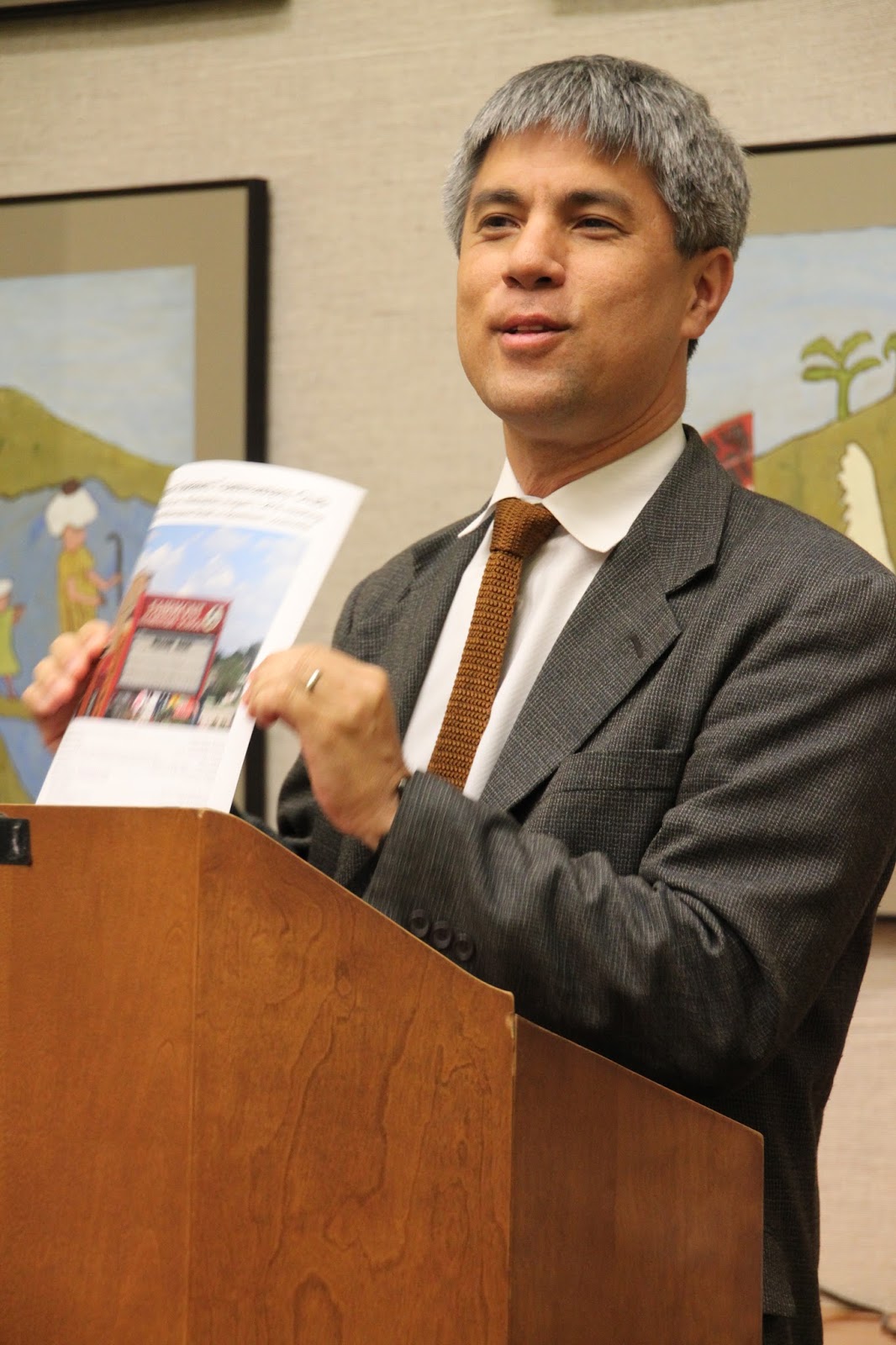
 Ada introduces and leads today's prepared speaker, Kristi, to the podium. Kristi is working on Project #7: Research Your Topic. The title of her speech is "Overcoming Barriers of Unemployment Among the Blind."
How would you feel if, throughout your career, either you
couldn't find employment, you were grossly under-employed, (in other words,
vastly over-qualified for the jobs you did get) or, if you managed to keep a
job, that no matter how long you worked, how glowing your evaluations, no
matter how well you got along with your co-workers...you were never promoted
above the token position in which you originally started? How would you feel if, when approached by
someone who didn't know how you do a thing you've done all your life, the
person assumed that if he or she couldn't do it, then you must not really be
adequate to the task either? How would
you feel if any of the adaptive kinds of equipment you needed had to be justified
by vocational rehabilitation counselors, your workplace compliance department,
or by some state agency, and it could cost at least $4,000? Today I'm going to share, through my own
experience, that of others I know, and research, what has been an ongoing
problem among the blindness population for years, all over the US, and, I
suspect, internationally as well: that
of unemployment and under-employment,
hence, low earning power.
Since I know statistics can become rather dull, the last
part of my speech will be directed to what I propose to do about it.
Much of my material is from the National Federation of
the Blind, a consumer-based organization in which 2/3 of the majority are
blind--founded in 1940; the American Foundation for the blind, and government
departments, such as the Bureau of the Census and the US Department of Labor.

Let me begin by saying I don't know first-hand, having
not been a teen or adult who was sighted and then became blind--how it feels to
lose your sight. So I'm not at all
minimizing the trauma that can affect people's lives. It must unbelievably scary to become
blind.. Scary as hell! Having to relearn things--maybe Braille,
travel techniques, how to cook and ways to live and work in today's society
safely. Scary, yes; a tragedy, no. At least with something scary, with proper
training and commitment, determination, and utilizing the tools or resources
available to us, techniques can be learned, just as we learn alternative
techniques when we have some other setback in life: like a heart attack, cancer, or maybe
something like twisting your ankle and having to develop different ways of
navigation. I think it's helpful,
therefore, to define what people mean when they say "blind". Or "blindness". There are several ways of defining them: the inability to see at all, or at best to
discern light from darkness. The
National Federation of the Blind takes a broader view: people consider themselves to be blind if
their sight is bad enough even with corrected lenses, that they must use
alternative methods to engage in any activity that persons with normal vision
would do using their eyes. The US Bureau
of the Census' question about "significant vision loss" encompasses
both total or near-total blindness and "trouble seeing, even when wearing
glasses or contact lenses". The
statutory definition of "legally blind" is that central visual acuity
must be 20/200 or less in the better eye with the best possible correction or
that the visual field must be 20 degrees or less. There are no generally accepted definitions
for "visually impaired" or "low vision" or "vision
loss".
These statistics are estimates: for adults 16 and older reporting significant
vision loss, who were in the non-institutionalized, civilian population)
meaning not in hospitals, nursing homes, prisons and the like...are all derived
from the American Community Survey results of 2013, as interpreted by Cornell
University's Employment and Disability Institute, (EDI).
Income and Poverty Status:
The annual earnings and poverty status in the United States
in 2013, median annual earnings:
$35,300. Median annual household income:
$36,500 (I believe this is the exception, not the rule).
Number living below the poverty line: 1,098,100 or 30.1%. The number of people aged 21 to 64 receiving
Supplemental Security Income with a visual disability, in the United States,
who received these benefits in 2013 was 631,100 (17.2%). Unemployment ("not in the labor
force") actively looking:
263,80. Therefore, for working
aged adults reporting significant vision loss, only 40.2% were employed in
2013. Those who aren't looking who are
"not in the labor force" are either on SSI, SSDI, in institutions, or
they just gave up altogether. The NFB
has stated (I believe this came from the US Department of Labor) that 70% of
the employable blind are unemployed; and of the 70% who are employed, 70% are
under-employed. I have been in the work
force off and on for 40 years, and this has been my experience.

What about the Office for the Blind? They show 11 people employed at the Census
all in the same position, and several at Pizza Hut. In contrast, according to the US Bureau of
Labor Statistics, the current unemployment rate of all categories is 4.9%. (Data.bls.gov.)
I can't go in to the statistics about sheltered workshops,
like LCI (Lions Club Industries) located at 1900 Brownsboro Road, since none of my
research addressed them. These places
employ people doing menial, assembly-line type tasks like wrapping plastic
flatware salt and pepper, napkins, say for the Military, or other such menial
tasks. Of all the people I have spoken
with who work there (and this is not a scientific study) none liked their jobs, but at least they had
a job. Many of the people are performing
far beneath their capabilities.
Vocational Rehabilitation just care about closing cases, not about good
job matches.
Louisville Metro Government has about three or four
blind people employed there, and isn't replacing any who leave, as in my
Transcriber position, for example. Of
all the transcribers working there since 1999, when Adelle was the first blind
person employed by them, or the Louisville Division of Police, I am the only
one at Headquarters left. The tragedy
isn't being blind, it's the waste of talent and resources, and people's lives.
What I'd like to do to Change this:
I would like to use my resources, skills, and experience
to launch a consulting firm that would work with companies that think outside
the box; that would contract with me to screen qualified, motivated blind
people with a strong work ethic to become employed with them; with a guarantee
that these companies, upon their employees' high performance rates, would, in
due time, be promoted in-house. I would
work with the employee and that company ongoing, to support both of them to
make this a very satisfactory fit. And I
wouldn't just infiltrate one company with 10 blind guys in a token position, so
they can take credit for closing cases.
Rather, I would always be looking to expand to other companies,
nationally and internationally, so that these businesses would receive low
turnover, highly competent employees, and these employees would thereby have a
lifelong opportunity for career advancement and a better life. I'm currently looking for investors to help
me accomplish this end.
Kristi, you always give us another way to look at things. This speech makes us aware of many things we may not have otherwise considered!

Another role a member can agree to take during our meetings is the Table Topics Master. Kathryn runs with the Labor Day theme and creates prompts that relate to that holiday. She first encourages volunteers to draw a slip of paper from her basket, then she looks for those who haven't had an opportunity to speak during the meeting. After all, that's why we're here!

Malinda replies that they say in life that you only get one good man, one good job and one good dog in life, and she's had them all. She was a stay-at-home mom for a while but saw a sign for Christian education that seemed to nearly rolled in front of her. After many hurdles, she took that job (here at the Presbyterian Center). It's been a match made in heaven. As for the worst job, she worked in retail and didn't get treated well. That one thankfully only lasted a few months!

Some countries only work 4 days a week. Do you think this would be beneficial for the U.S.? Why or why not?
Octavia likes the idea of a 4-day work week. That would give her a long weekend to enjoy, giving her more options for relaxing and being with family. It would also give her an extra day for her to handle a doctor's appointment and any other business she might want or need to conduct. She believes the 4-day work week would be beneficial.

George used to spend his time watching football when the pro-season ran through Labor Day, but it doesn't any more. Now he labors on that day! Restaurant work is very challenging, and he listed numerous duties that waiters face daily. Daunting!!!!! He added that being in the weeds is something everyone needs to experience. Until you've waited tables, you can't imagine how demanding it is!

What career did you dream of as kid?
Kristi admits that as a child she dreamed of being a stewardess. There was a long bus ride she took where sandwiches, mints and reading materials were passed out to the passengers. She thought that working on a plane would be on a grander scale. However, she didn't anticipate problems like unruly or untoward passengers. As a youngster, she also tried to type out what everyone around her said. Now she actually writes and transcribes for a living!

In what ways do you think the under-employment rate in the U.S. could be improved?
Perry says that unfortunately not everyone can get their skills and gifts matched to a job. One answer is to improve education, which does its best to train people on computers and in writing skills. He adds that he thinks Bernie Sanders and Hillary Clinton have some good ideas in this area.

What is your dream job?
Kay admits that she's never learned how to work smart...just hard! As a teacher, she was in the classroom early, out late, and worked all weekends on lesson plans. Too much for her! But her dream job might be owning a Holistic Disco. She's into wellness and loves to dance. The hours would be from 8-12 midnight at the latest...so that people could come after dinner and enjoy 70's music and great dance tunes like "Uptown Funk" but wouldn't have to stay up so late to enjoy it, the disco ball, or her whole-grain cookies.
 Members, Catherine, Kerri and Octavia, mull over the speeches they heard during our Table Topics session. Everyone votes and Kay, this blogger, is honored to take home the trophy. I decided to announce my little achievement to my sisters because they know I have struggled with fears over public expression. My sister Lynn replied, "I always admired your courage to tackle public speaking reluctance in such a structured, committed fashion. You are a conqueror." I must add that Toastmasters and my friends in Peace Speakers gave me the tools to overcome!
 Vicki, our Area 66 Director, visits us today in her usual helpful mode: to share what's going on in Toastmasters that is potentially beneficial to our club. Here's a summation of what she imparted:
- Toastmasters coins reflect 4 core values: integrity, service, respect, and excellence. Vicki recommends that we share a coin when someone in our club exhibits one of these 4 core values. She wants to hear stories of how they got passed to individuals.
- Let's get members involved in a practice speech contest and shoot for the international. Our club could do a practice contest, where we'd have to adhere to exact times and fill roles. Vicki will enter this contest and wants us to put ourselves out there as well. It would be a good experience for us all. Vicki would help us and hopes we'll make it a first of the year goal.
- Look at other potential contests to enter. To start off, get a few volunteers for the Newsletter Contest and a few more for the Video Contest. Involve people here from the Presbyterian Center to experience the format as well. This is a great opportunity to work as a team!
- Go back and read the Pathways article on page 12 of the July 2016 Toastmaster Magazine. Get informed about this more liberal arts and dynamic pathway - the revitalized Toastmasters education program. Vicki really likes it!
- Consider doing a round table discussion for Table Topics pertaining to that Toastmaster Magazine Pathways article at an upcoming meeting. Let members know in advance so they can review beforehand!
- Visit the Toastmasters International website to personalize Toastmasters business cards for yourself. It's easy to print your own! This site has been updated and is fascinating: Create a scavenger hunt to get members to peruse it. Here's the link to it: www.Toastmasters.org
- Make sure members are clapping the entire time speakers are moving either to or from the podium. Also, never leave the podium unattended or empty. That's a vacuum that is unacceptable!
- Attend the District 11 Fall Conference this fall. It's here in Louisville and our Peace Speakers are already signed up as a club to attend! Vicki said this conference is VERY different, and we'll want to be there.
District 11 2016 Fall Conference
November 4-5, 2016
Hosted by Division FRamada Plaza Hotel
9700 Bluegrass Parkway, Louisville, KY 40299
Phone: (502) 491-4830
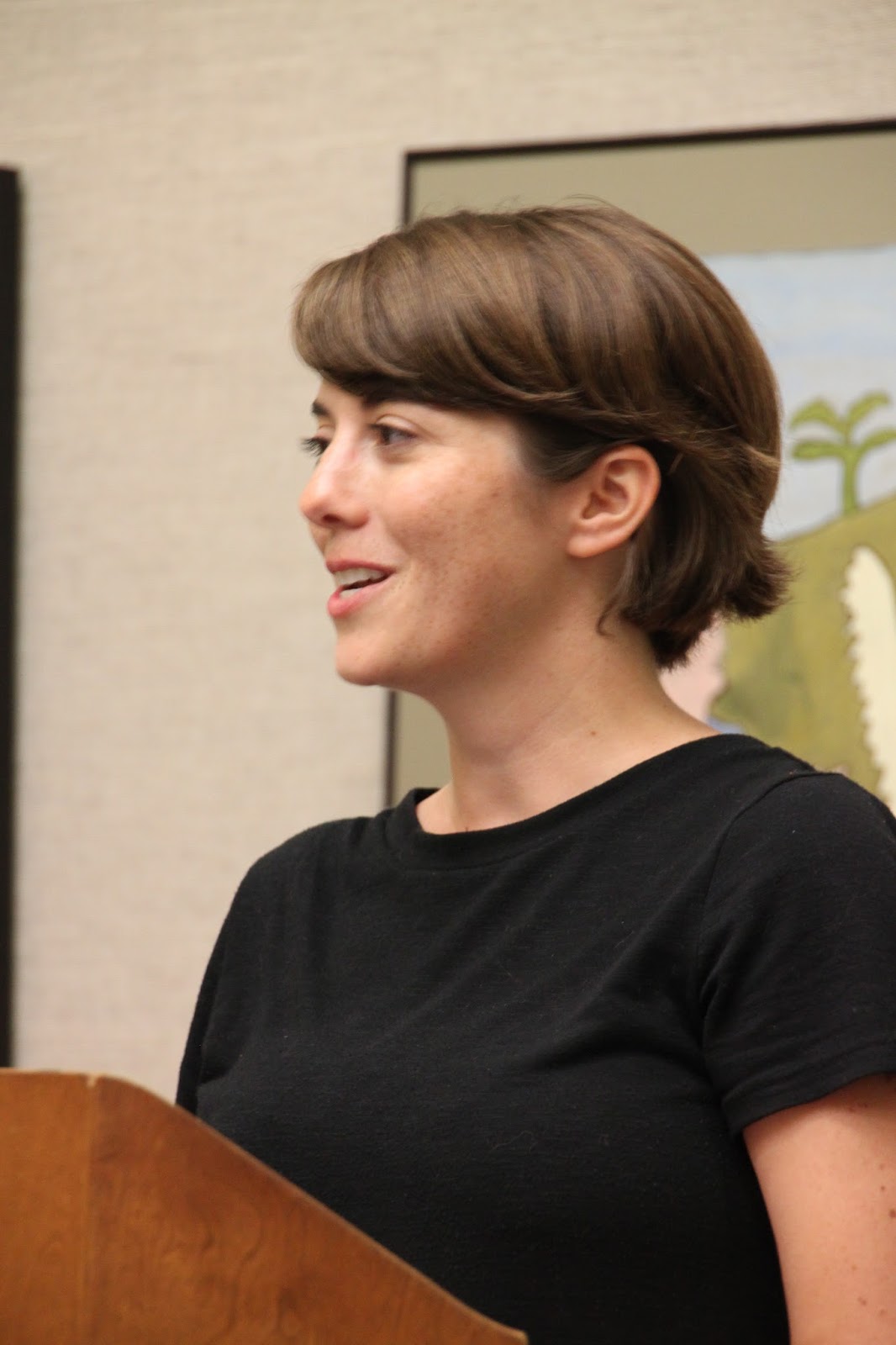
Another role one of our members assumed today is the Speech Evaluator. Katie shares her opinion of Kristi's speech using the guide in the Competent Communication Manual. She notes that Kristi fulfilled the goals of the speech and that it was well-researched. Her speech was very purposeful, had good flow, and points made were all supported. Kristi made very relatable tips and posed questions for the audience to ponder. Katie also appreciated the solution given at the conclusion of Kristi's speech. Katie recommended that she give more testimonials, as she's great at sharing anecdotes.


If you're a visitor to this blog, I hope you've learned enough about our Toastmasters meeting to be intrigued and will possibly visit us some 1st or 3rd Wednesday. Give yourself a chance to experience a fun way to grow your leadership and speaking skills in a warm and inviting environment. We hope to see you soon!
OUR NEXT FEW 2016 MEETINGS:
Wed., Sept. 21- PPC Library Room 2061
Wed., Oct. 5 - Room 5000
Wed., Oct. 19 - Conference Room B
Peace Speakers Toastmasters Club
1st and 3rd Wednesdays (usually)
1:00 - 2:00 p.m.
100 Witherspoon Street
Downtown Louisville, KY
Respectfully submitted,
Kay Chambers
Blogger for Peace Speakers
and VP of Education